March 16, 2009 is a day I will never forget.

I sat with the phone against my ear in stunned silence trying to comprehend all that she was telling me. As soon as I hung up the phone, I very mechanically walked out of my cubicle and found the nearest stairwell entry. I sat on the steps in the stairwell, hoping no one would actually use the stairs between floors, and I began to cry. As I was crying I tried to call my husband to tell him, but his line was busy. I then called my daughter and my oldest brother. No sooner after I hung up with them, my husband called me back. Telling my family made the news real: I had breast cancer.
In April we met with the breast surgeon and in May I had a lumpectomy and sentinel node biopsy. At first we thought the cancer was intact, just in the breast, but further tests revealed cancer cells in one of the lymph nodes that was removed and biopsied. The month of June brought with it a whole slew of tests and scans and in July I began the first of six rounds of chemotherapy.
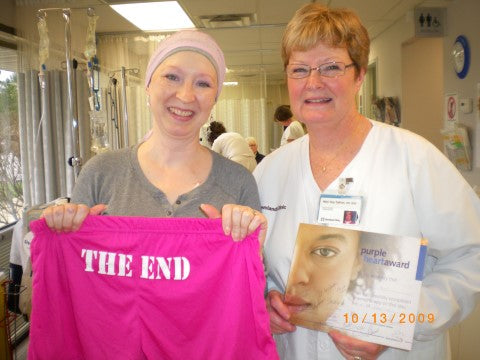 October 13th was the last of the chemo cycles and, boy was I glad. By then my body was exhausted trying to keep up with healing of the good cells that were being destroyed along with the bad ones. I had full blown anemia, nerve damage in my fingers and toes, short-term memory loss and a whole host of other issues brought on from the very drug that was killing cancer cells in my body. From December 21st to February 3, 2010, I underwent radiation therapy daily, except on holidays and weekends. In the beginning it wasn’t so bad. I was able to go to work and at lunchtime I went across the street to the hospital, received my treatments and then drove home to lather up with lotion and finish my day of work from home.
October always has me thinking back on my last days of chemotherapy and rejoicing each year that another year has passed and that I am still cancer free. Every October millions of people around the United States participate in Breast Cancer Awareness activities. The media blows up with all things pink and advice on how to cure cancer and what to do to help fund cancer research. All good things. I did my own research on my particular type of cancer and was surprised how much in common all cancers had in the area of root causes. Genetics, exposures to toxins, stress and lifestyle habits were all key factors in almost all research studies done.
 In my own case, I came to believe that stress and my diet were the key factors in my body giving in to this horrible disease. When I filled out the paperwork for my surgeon, I had to answer a whole list of questions that pertained to risk factors for getting cancer. I wasn’t a smoker, I had breast fed both of my children, I didn’t do drugs, etc. The only one I checked off was that I am Caucasian. So why did I get cancer?
More and more studies are finding that the Standard American Diet (SAD) is a large factor in the increase of cancer cases. I discovered that even though I ate healthier than the typical American, or so I thought, the food that I was eating was most likely a contributor to my cancer.
There is too much information to share in this blog post, but the low down and dirty is, America has to wake up to what we are eating and how it is processed. I won’t begin to pretend that we can all wave a magic wand and start eating healthier today and be disease free tomorrow. However, even small changes in our diet can increase our likelihood of maybe a few years on our life expectancy, but more importantly, healthier, more productive years now and in our later years, that we can remember and enjoy. When we feed our bodies good, nutritious, toxin-free foods, we have more energy, have sharper minds, better skin, healthier libido and a more positive outlook on life.
Eating less meat and animal protein and more vegetable, fruits, whole grains and legumes is a step in the right direction. Wealthier countries tend to have higher rates in cancer and mortality due to cancer. This is likely to be due in part to better diagnostics in developed countries. However, the tendencies of wealthier populations to be more obese, consume more alcohol and get less exercise are also a significant factor. These countries can afford and consume more “convenient” foods and eat out more often. The choices they make while dining out lean toward more fatty meats such as beef and fried foods as well. These foods often cause inflammation in our bodies which can lead to many serious diseases including cancer. According to many sites, 1 in 3 Americans will die from cancer that could be prevented!
The SAD diet contains foods that are directly related to many degenerative diseases. Even children at earlier and earlier ages are being diagnosed with diseases that not that long ago were considered “old age” diseases, such as cancer, heart disease, arthritis, diabetes. The facts are that meat (including chicken and fish), dairy, and eggs can be linked directly or indirectly to about 90% of all physical problems and deaths in America today! [source]
Americans, and our wealthier counterparts across the globe, have the luxury of convenient foods, but is that really a good thing? We no longer have control over what chemicals our produce is sprayed with, or what drugs our animals are shot up with. We need to remember that we eat what is put on and in the foods that we consume.
God intended us to eat to nourish and sustain our bodies. There are arguments as to what He planned for us to eat before the sin of man and what He allowed us to eat after the sin of man, but regardless of your or my opinion, I’m thinking He didn’t want any of us to eat a spoonful of chemicals and toxins with each meal.
October is National Breast Cancer Awareness Month. Take time to be aware of what you are eating, and how it is brought to your table. Be aware of what can cause cancer and begin to prevent it in your house. To read my entire story I encourage you to visit the Amid Life – A Journey archives beginning in 2009.

